




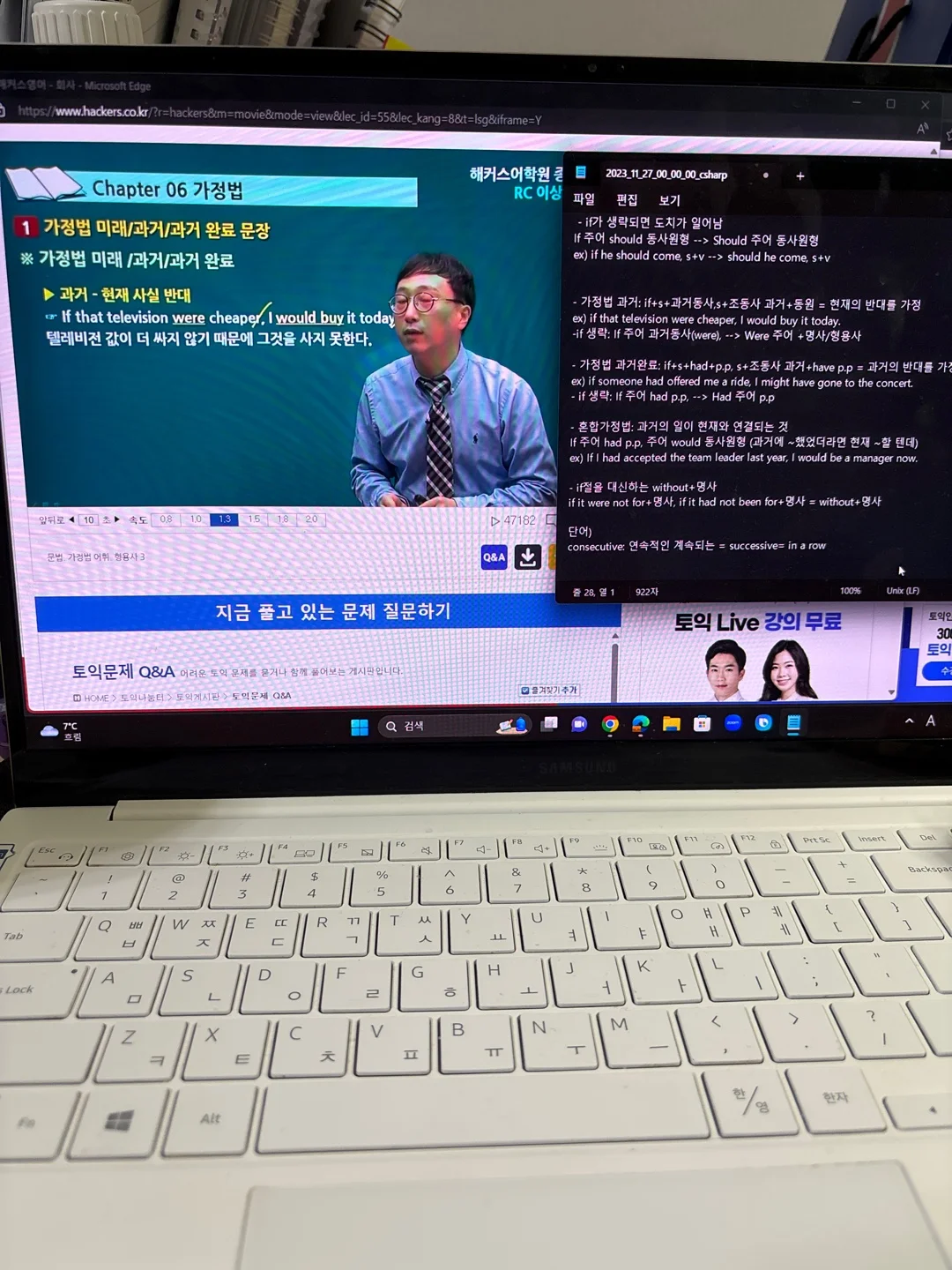
<가정법 >
정의: 현재나 과거의 반대 상황을 가정- If I were tall, If I had been tall
- 주로 if로 시작, 현재는 과거시제, 과거는 과거 완료 시제
- 가정법 미래: if+s+should+동원, s+조동사+동원 = 가능성이 희박만 미래, 미래의 조건
ex) if it should snow, I will stay home.
- if가 생략되면 도치가 일어남
If 주어 should 동사원형 --> Should 주어 동사원형
ex) if he should come, s+v --> should he come, s+v
- 가정법 과거: if+s+과거동사,s+조동사 과거+동원 = 현재의 반대를 가정
ex) if that television were cheaper, I would buy it today.
-if 생략: If 주어 과거동사(were), --> Were 주어 +명사/형용사
- 가정법 과거완료: if+s+had+p.p, s+조동사 과거+have p.p = 과거의 반대를 가정
ex) if someone had offered me a ride, I might have gone to the concert.
- if 생략: If 주어 had p.p, --> Had 주어 p.p
- 혼합가정법: 과거의 일이 현재와 연결되는 것
If 주어 had p.p, 주어 would 동사원형 (과거에 ~했었더라면 현재 ~할 텐데)
ex) If I had accepted the team leader last year, I would be a manager now.
- if절을 대신하는 without+명사
if it were not for+명사, if it had not been for+명사 = without+명사
단어)
consecutive: 연속적인 계속되는 = successive= in a row
confidential=secret=classified 기밀의
unanimous 만장일치의
anonymous 익명의

 1
1








내일도 화이팅이요
좋아요
0