19강. 전치사 1 ♣ 전치사의 역할 He is on leave.→ 형용사[보어 역할] I met him at the park.→ 부사 전치사구가 보어로 사용이 될 경우 출제 유형 He is [current/currently] on leave. → be under/out of/among+명사 ♣ 전치사의 형태 at/on/in such as/with regard to=about following=after/notwithstanding=despite ♣ 전치사의 목적어 명사, 대명사, 명사절(명사절 접속사+주어+동사) 1. 시간과 장소 in/at/on ◆ 시간 전치사 in/at/on(at〈on〈in) at(시간/시각) | on(요일/날짜) | in(달, 분기, 년) | at 7 o’clock at noon at night at present | on Friday on May 18th on Christmas day | in August in spring/summer in the first quarter in 2008 in the morning in the century |
* 특정한 날의 아침/점심/저녁 → on Monday morning ◆ 장소 전치사 in/at/on at(지점/장소) | on(표면) | in(공간) | at home/work at the bus stop at the station at the meeting at the press conference We at Hackers~ | on the wall on the table on the third floor [전파] on TV on the radio on the Internet | [in+도시/국가] in New York in Korea [in+장소→ ~안에] in a box in the shop [in+잡지/신문/사보] in the newspaper |
at the [beginning/end/top/bottom] of in the middle of⇒ ~의 중간에 ☺ ‘in/at/on’은 정말 헷갈리는 전치사예요. 문장에 어떤 걸 써도 될 것 같은데 굳이 구분해야 할 이유가 있나 싶을 정도로 비슷비슷하거든요. 영어권에서는 그래도 뭔가 차이가 있기 때문에 경우에 따라서 다른 전치사를 사용하겠지요. 우리나라말로 번역하면 세 가지 모두 ‘~에’인데 영어권에서는 뭐 이리 세세하게 구분을 해서 쓰는지 모르겠어요. ‘in/at/on’은 시간과 장소 전치사로 모두 사용되기 때문에 더 골치 아파요. 어떨 때 어떤 전치사를 써야 할지 모르겠거든요. 시간 전치사로 쓰일 때는 그래도 시간의 크기별로(at〈on〈in) 구분해서 쓰면 되는데, 장소 전치사로 쓰일 때는 구분하기가 애매해요. ‘on’은 표면, ‘at’은 지점이나 장소, ‘in’은 공간에 사용한다고 배우기는 했는데 막상 예문을 보면 헷갈려요. ‘at the station’에서 ‘at’대신에 ‘in’을 써도 될 것 같은데 실제로는 ‘at’만 써야 하잖아요. 그러니까 제가 생각하기에 ‘in/at/on’은 깊게 생각하지 말고 그냥 그것들이 쓰인 표현들을 눈에 익히는 게 제일 좋은 방법인 것 같아요. ◆ in/at/on 숙어 in 숙어 | at 숙어 | on 숙어 | in advance 사전에 in writing 서면으로 in demand 수요가 있는 in detail 상세하게, 세부적으로 in bulk/quantity 대량으로 in particular 특별히, 특히 in a row/line/queue 줄을 서서 in a timely manner(=fashion) 시의 적절하게 | * at은 최상급/숫자와 절친!!! at least⇒ 적어도 at the latest⇒ 늦어도 at the earliest⇒ 빨라도 at your earliest convenience⇒ 가능한 빨리 at a low/high price⇒ 저가에/고가에 at the age/speed/velocity/rate/temperature of ⇒ 나이/속도/비율/온도 | on time⇒ 정각에 on foot⇒ 도보로 cf)by+교통수단 on leave/on vacation⇒ 휴가 중인 on/upon request⇒ 요구 시에 on the way to⇒ ~로 가는 도중에 on the whole=in general⇒ 일반적으로 on a regular basis⇒ 규칙적으로 on the waiting list⇒ 대기자 명단에 on the left/on the right⇒ 왼쪽/오른쪽 |
2. 시점과 기간 시점(since) | 기간(for) | since from by/until before/prior to +시점 | within for/during over through/throughout +기간 |
since | 품사 | 예문 | 전치사 | since+ | 3 o’clock/noon/Monday/May its founding/establishment[설립] its inception/beginning[시작] | 접속사 | you left me |
by(전) | until(접/전) | 행위가 뒤에 시점 까지 완료 → 제출/완료/반납 | 행위가 뒤에 시점 까지 지속 → 휴가/축제/할인행사/영업시간/출장 | 제출 submit/hand in/turn in 완료 finish/complete 반납 return | last 지속되다 stay 머무르다 open 열려 있다 remain (상태가)유지되다 |
☺ 시점을 나타내는 ‘by’와 ‘until’은 의미가 ‘~까지’로 똑같기 때문에 의미만으로는 구별할 수 없어요. 속뜻을 알아야 문제를 풀 수 있어요. 전에 한 번 책에서 ‘by’와 ‘until’에 대해서 본 적이 있는데 바로 이해가 가지는 않더라구요. 그런데 이번에 강의를 들으면서 확실하게 이해가 됐어요. 강사님이 아주 똑 부러지게 둘의 차이점에 대해서 설명해주셨거든요. ‘by’는 어떤 행위가 일정한 시점까지 ‘완료’되는 것이고, ‘until’은 어떤 행위가 일정한 시점까지 ‘지속’되는 것이에요. 저는 제 나름대로 ‘by’는 일회적인 것이고, ‘until’은 지속적인 것이라는 기준을 세웠어요. 그렇게 하고서 예문을 보니 제가 세운 기준에 딱딱 들어맞아서 신기했어요.^^ while(접) | during(전) | for(전) | 1)+주어+동사 while I was watching a movie 2)+전치사구 while on duty while on vacation | 특정 기간(보통 숫자×) during your stay during your visit during the speech | 구체적인 기간 for 3 months for a week for a decade for ages(오랜 동안) |
◆ 시점을 나타내는 전치사와 기간을 나타내는 전치사의 구별 I will have this done (within, by) the end of next week.☞ 시점 I have studied economics (since, for) three years.☞ 기간 for/since/while/during | Max jogs for thirty minutes a day. Kelly has lived in Korea since 2012. I have been living in Seoul for a decade. Gil has been waiting for the bus since noon. Don’t use the cell-phone while on duty. Max has been working at the shop since its opening. Drinks will be provided during the break. |
3. 위치 ◆ 위치를 나타내는 전치사 * above/over ~위에 * below/under ~아래 * beside/next to ~옆에 * near[전부형] VS nearly[부]=almost We prefer to live near a park. We nearly missed the bus. ☺ 평소에 ‘near’와 ‘nearly’가 엄청 헷갈렸었는데 마침 오늘 강의에서 이 둘의 차이점에 대해서 배웠어요. 강의를 듣기 전에는 ‘nearly’가 ‘near’의 부사형이라서 ‘가까이’라는 뜻인 줄 알았거든요. 그런데 ‘near’와 ‘nearly’는 형태만 비슷할 뿐이지 뜻은 전혀 다르더라구요. ‘nealry’는 가깝다는 뜻과는 거리가 먼 ‘거의’라는 뜻의 부사예요. ‘가까이’라는 뜻의 부사는 ‘near’였구요. ‘near’는 형용사로 ‘가까운’이라는 뜻으로만 쓰이는 줄 알았는데 부사와 전치사로도 쓰이네요. ‘high’와 ‘highly’도 마찬가지예요. 이들 뿐만이 아니라 형태는 비슷하지만 뜻은 서로 관련이 없는 형용사와 부사가 많으니 헷갈리지 않게 꼭 외워야 해요. * within 1)장소→ 이내에 within the firm/the city 2)기간→ 이내에 within a week/ a month * opposite→ 맞은편에 She is sitting opposite me. ◆ 위치 전치사 숙어 above | within | above the ocean → 바다 위에 above his income → 그의 소득을 초과한 above all others → 누구보다 뛰어난 above all → 무엇보다 우선 | within the limit → 범위 내에서 within the walking distance → 걸어서 갈 수 있는 =adjacent =in the vicinity of |
over | 시간(~에 걸쳐서) | over+the+시간 over the last/past/next + five years | 부대상황(~하면서) | over a cup of coffee | 수단 | over the telephone/fax cf)by phone, by fax | 숙어표현 | concern over⇒ ~에 대한 염려/걱정 dispute over⇒ ~에 대한 논쟁/논란 have the edge(=advantage) over⇒ ~보다 유리하다 |
under | under construction⇒ 공사 중인, 진행 중인 under warranty⇒ 기간 내에 있는 under the supervision(direction) of⇒ ~의 감독아래에 있는 under the new management⇒ 새로운 경영진 하에 under the insurance policy⇒ 보험 약관의 규정에 따라 under 16 years of age⇒ 16세 미만의 under pressure⇒ 스트레스가 많은 under way⇒ 진행 중인 under repair⇒ 수리중인 |
4. 방향 ◆ 방향을 나타내는 전치사 전치사 | 의미 | 예문 | from | ~에서, ~로 부터 | from the front desk | to | ~로 | Sent it to my e-mail appointed/promoted to the president deliver it to my address | across | ~를 가로질러서 | across the street cf)across the world 전 세계 곳곳에 | along | ~를 따라서 | along the rive cf) along with along with the wind 바람과 함께 |
for | ~를 향해서 | Leave for New York | 기간 | for 20 years | 목적 | I went to the supermarket for bread | ~를 대신해서 | =in place of, on behalf of |
toward(s) | 방향 | She ran toward me. | 목적/결과 | Working toward the goal | 시간 | toward the end of the month 월말 즈음에 |
◆ 방향 전치사 숙어 표현 to | out of | to some extent to a certain extent⇒ 어느 정도 까지는 to my knowledge⇒ 내가 알기로는 to one’s satisfaction ⇒ ~가 만족스럽도록 | out of print⇒ 절판된 out of stock/inventory⇒ 재고가 없는 out of order⇒ 고장이 난 out of control⇒ 통제되지 않는 out of fashion⇒ 구식의 out of curiosity⇒ 호기심에서 |
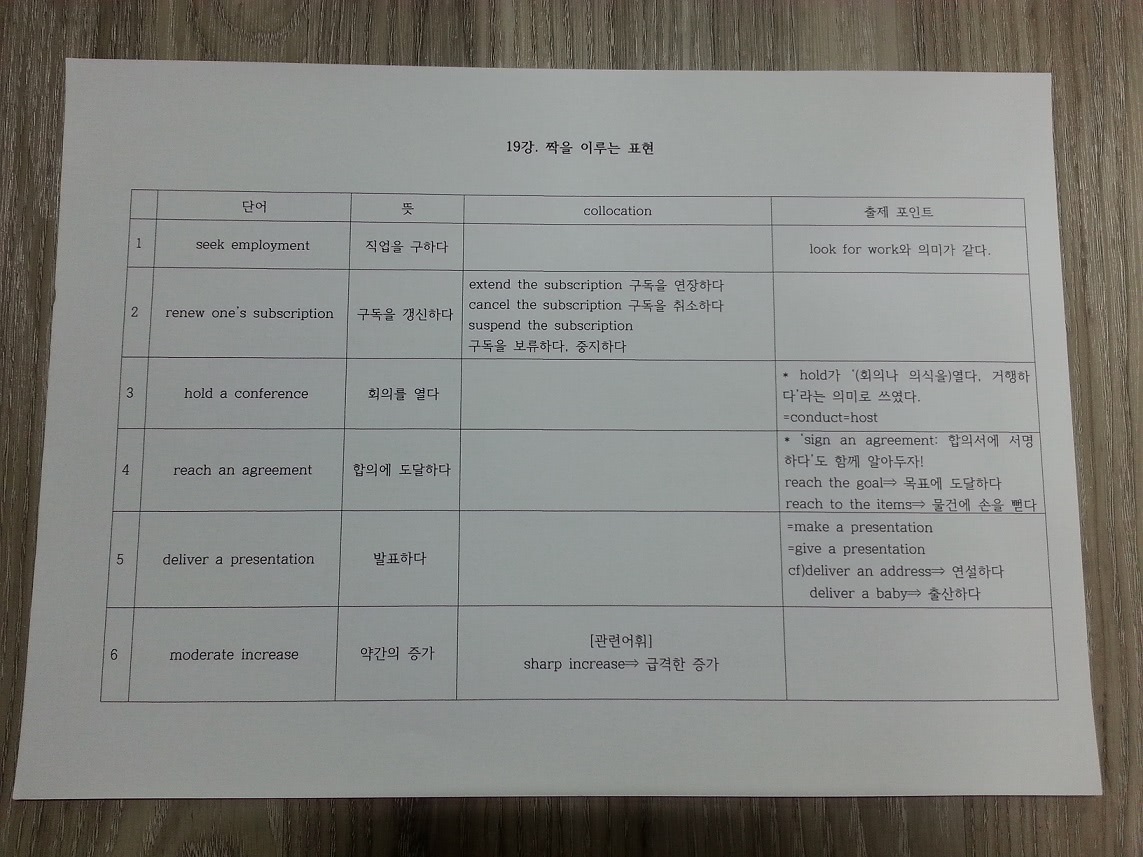
★ 어휘- 짝을 이루는 표현(19강에서 배운 어휘를 표로 정리한 것)
| 















 0
0


