




 | 아로마 | |||||||||||||||||||||||||||||||||||||||||
|---|---|---|---|---|---|---|---|---|---|---|---|---|---|---|---|---|---|---|---|---|---|---|---|---|---|---|---|---|---|---|---|---|---|---|---|---|---|---|---|---|---|---|
 | 22강. 관계절
♣ 명사절 VS 형용사절 VS 부사절
♣ 형용사절 접속사→ N 접속사+(주어)+동사
N who/which/that→ 관계대명사(불완전한 문장) N when/where/how/why→ 관계부사(완벽한 문장)
☺ 안 그래도 평소에 명사절, 형용사절, 부사절의 차이점에 대해서 굉장히 궁금했었는데 강사님이 본격적인 수업에 들어가기 전에 이 세 가지의 개념을 짚어주셔서 의문점이 풀렸어요. 어차피 명사절과 부사절은 바로 뒤에서 배우게 될 테지만 미리 이 세 가지를 비교해봄으로써 다른 것들과는 구별되는 형용사절, 즉 관계절만의 특징을 확실히 알게 되어 의미 있었어요.
1. 관계절의 자리와 쓰임
♦ 관계절은 주어와 동사 사이나 문장의 끝에 온다.
-주어와 동사 사이 The students whom Ms. Henderson taught were from Japan. -문장의 맨 마지막 I didn’t get a copy of the report which was handed out yesterday.
♦ 관계절 자리에 대명사나 부사는 올 수 없다. Feel free to take the brochures, (those, which) are located at reception.
I often shop at the market (there, where) farmers sell fresh produce.
♦ 관계절의 동사 자리에(준동사, 명사, 부사)는 불가 The university will contact those who (passing, pass) the entrance exam.
♦ 주격 관계대명사의 수일치 N who/which/that+동사→ Anyone who is/Those who are
2. 관계대명사의 선택과 격
♦ 선행사가 사람이면 who(m), 사물이면 which를 쓴다.
Ms. Harris wants to hire an assistant (which, who) is well organized. The invitations (who, which) were left with Ms. Rawson need to be sent out.
♦ that은 콤마, 전치사 다음에는 사용 불가
♦ 관계대명사에는 주격, 목적격, 소유격이 있다. 1)주격 I haven’t met the woman who is speaking at the podium. The train which is at platform 9 is heading for Vienna.
2)목적격 The man whom/who/that I introduced to you is my boss. Eva accepted the promotion which her supervisor offered.
3)소유격(형용사 역할) N whose N + 완벽한 문장 ☞ I visited my friend, whose apartment is nearby.
예시1)I have a car. Its color is red. ⇒ I have a car whose color is red.
예시2)I have a car. Everybody likes its color. ⇒ I have a car whose color everybody likes.
예시3)I have a car. Everybody likes its beautiful design. ⇒ I have a car whose beautiful design everybody likes.
☆ 가장 많이 출제되었던 구조 ⇒ N whose N be+pp Gil and Sharon, the writers whose books were selected for the Book of the Year, are now rich.
3. 전치사+관계대명사 [I interviewed a woman.]+[I had previously met with her.] I interviewed a woman whom/that I had previously met with. I interviewed a woman with whom I had previously met.
→ 전치사가 도치 되면 whom/which만 사용 가능
4. 수량 표현+관계대명사 The class has 20 students. + All of the students are boys. ⇒ The class has 20 students, and all of them are boys. ⇒ The class has 20 students, all of whom are boys.
▶N(사람 )all/some/most of _____ 동사☞ whom ▶N(사물) all/some/most of _____ 동사☞ which
There were 50 attendees, all of ______ are male. (A)them (B)whom
I bout the books, some of ______ are comics. (A)them (B)which
☺ ‘수량 표현+관계대명사’표현은 전에도 틀렸던 적이 있는 거라서 유심히 강의를 들었어요. ‘The class has 20 students, all of whom are boys.’와 비슷한 문제였는데 저는 관계대명사 ‘whom’자리에 대명사 ‘them’을 답으로 골랐었거든요. ‘them’을 사용해도 문장을 해석하는데 아무 문제없잖아요. 그리고 왠지 ‘them’이 ‘whom’보다 더 자연스럽게 느껴지기도 하구요. 그런데 오늘 강사님의 설명을 듣고 제 생각이 틀렸다는 것을 알았어요. 한 문장에는 하나의 동사만 있어야 하는데, 이 문장에서는 두 개의 동사가 있어요. 이 때는 이 두 개의 동사를 이어주는 역할을 하는 접속사가 필요한데 여기서는 ‘whom’이 관계대명사이기 때문에 그런 역할을 해요. 그래서 ‘whom’이 확실한 답이 되는 것이죠. 이렇게 논리적으로 차근차근 접근하니 왜 ‘whom’이 정답이 되는지 알겠어요. 앞으로는 제 주관적인 느낌만으로 문제를 풀지 않고 꼭 논리적인 근거에 의해서 문제를 풀어야겠어요.
5. 관계대명사의 생략
◆ 주격 관계대명사의 생략
◆ 목적격 관계대명사의 생략
N who(m)/which/that 주어+동사 → N [목적격 관계대명사] S+V
ex)The car (that) I like/I am looking for/I am interested in
The books (that) I like are~
The topics ______ will discuss at the meeting are~ (A)our (B)us (C)ourselves (D)we
☺ 문장을 보다보면 명사 뒤에 바로 과거분사, 형용사, 전치사구가 오거나, ‘주어+동사’가 오는 경우를 많이 보게 돼요. 이 때는 왜 그렇게 되는지 의문을 갖지 않고 그냥 습관적으로 그렇게 쓰나보다 하고 대수롭지 않게 넘겼거든요. 그런데 오늘에서야 그 안에 숨겨진 문법을 알게 되었어요. 바로 주격 관계대명사와 목적격 관계대명사가 생략된 문장이었던 것이지요. 주격 관계대명사와 be동사가 생략되면 선행사 뒤에 바로 과거분사나 형용사, 전치사구가 올 수 있고, 목적격 관계대명사가 생략되면 선행사 뒤에 바로 주어와 동사가 올 수 있어요. 주격 관계대명사와 목적격 관계대명사의 생략을 배우고 나니 문장의 구조가 더 잘 보이는 것 같아요.
6. 관계부사
◆ 선행사의 종류에 따라 각각 다른 관계부사가 쓰인다.
→ 접속사+부사의 역할 → 완벽한 문장이 온다.
Friday is the final day when discounts are offered. The apartment where I live has a gym and swimming pool. Olivia didn’t give me a reason why she changed the terms of the contact. It is important to find out (the way/how) the equipment works before using it.
◆ 관계부사→ ‘전치사+관계사’ The building where(=in which)the employees work is safe and secure. The date when(=on which) I started this job was February 28.
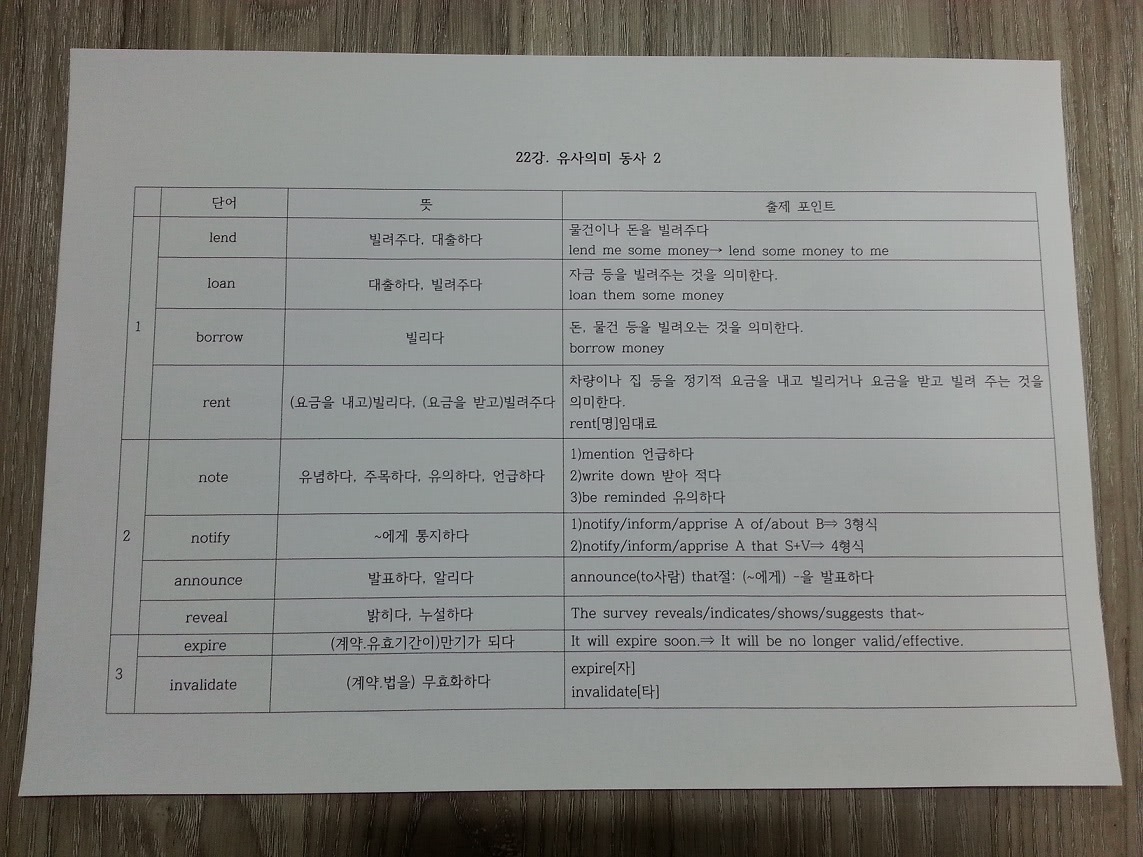
◆ 관계부사 다음에는 완전한 절, 관계대명사 다음에는 불완전한 절 There was a time when this restaurant served hundreds of customers each day. That is the woman who complained about her order. ★ 어휘- 유사의미 동사 2(22강에서 배운 어휘를 표로 정리한 것)
|









 0
0


