



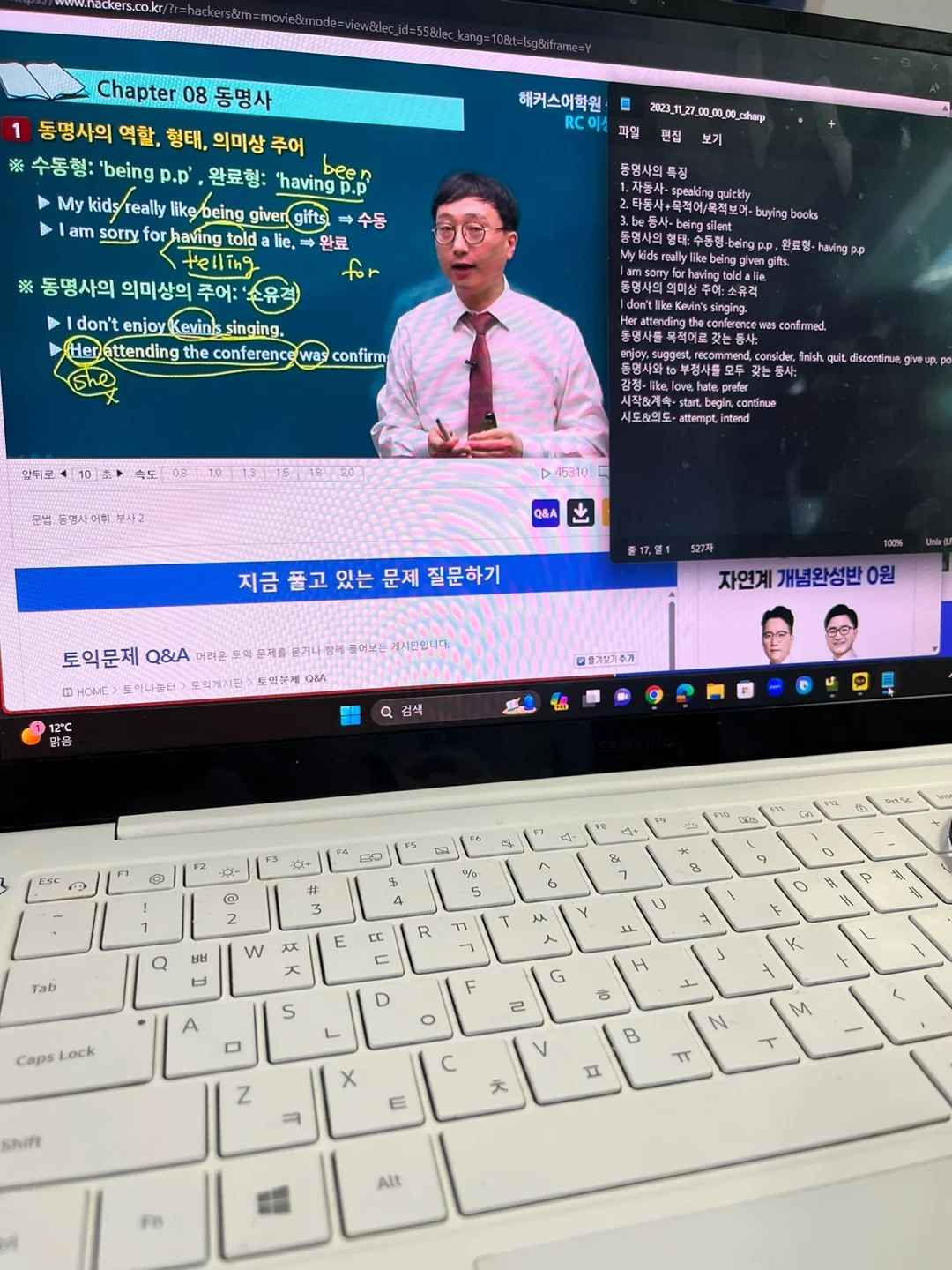
동명사의 특징
1. 자동사- speaking quickly
2. 타동사+목적어/목적보어- buying books
3. be 동사- being silent
동명사의 형태: 수동형-being p.p , 완료형- having p.p
My kids really like being given gifts.
I am sorry for having told a lie.
동명사의 의미상 주어: 소유격
I don't like Kevin's singing.
Her attending the conference was confirmed.
동명사를 목적어로 갖는 동사:
enjoy, suggest, recommend, consider, finish, quit, discontinue, give up, postpone, dislike, deny, mind ,avoid
동명사와 to 부정사를 모두 갖는 동사:
감정- like, love, hate, prefer
시작&계속- start, begin, continue
시도&의도- attempt, intend
동명사는 부정관사(a, an)와 쓰일 수 없음. 그러나 the랑 같이 쓸 수 있음.
동명사는 목적어로 한정사(관사, 지시형용사, 소유격, 수량형용사)+명사 가능
가산명사는 한정사를 앞에 붙이거나 -s를 붙여 사용. ex) process, plan, seat, fund
불가산명사는 단독으로 사용 가능. ex) processing, planning, seating, funding
동명사 관련표현: 전치사 to+동명사
lead to ~의 원인이 되다.
contribute to ~에 공헌하다
object to ~에 반대하다
be contributed/ dedicated/ committed to
look forward to ~ing ~하기를 고대하다.
어휘)
otherwise 달리, 그렇지 않으면
unless otherwise 달리 ~하지 않는다면
occasionally=sometimes=sporadically 때때로

 0
0


