



가정법
가정법이란 : 현재나 과거의 반대 상황을 가정
가정법은 주로 'If'로 시작, 특별한 시제를 사용
* 현재 --> 과거 시제
* 과거 --> 과거 완료 시제
* 가정법의 if는 조건절의 if와 다르다.
If you need any help, --> 사실 그대로는 표현
If I were you, --> 현재 상황과 반대
가정법 미래/과거/과거 완료
미래 - If S should 동.원 , S 조동사 동.원 -> 가능성이 희박한 미래, 미래의 조건
과거 - If S 동사 과거, S 조동사 과거 동.원 -> 현재의 반대를 가정
과거 완료 - If S had p.p, S 조동사 과거 have p.p -> 과거의 반대를 가정
미래 - 가능성이 희박한 미래
If it should snow tomorrow, I will stay indoors.
내일 눈이 올 가능성이 거의 없다.
과거 - 현재 사실 반대
If that television were cheaper, I would buy it today.
텔레비전 값이 더 싸지 않기 때문에 그것을 사지 못한다.
과거 완료 - 과거 사실 반대
If someone had offered me a ride, I might have gone to the concert.
누군가 태워 주지 않았기 때문에 콘서트에 가지 못했다.
핵심 단어
consecutive 연속적인, 계속되는
동의어
consecutive = successive = in a row
consecutive wins
latest 최신의
latest updates 최신 소식
latest products 신제품 = up-to-date
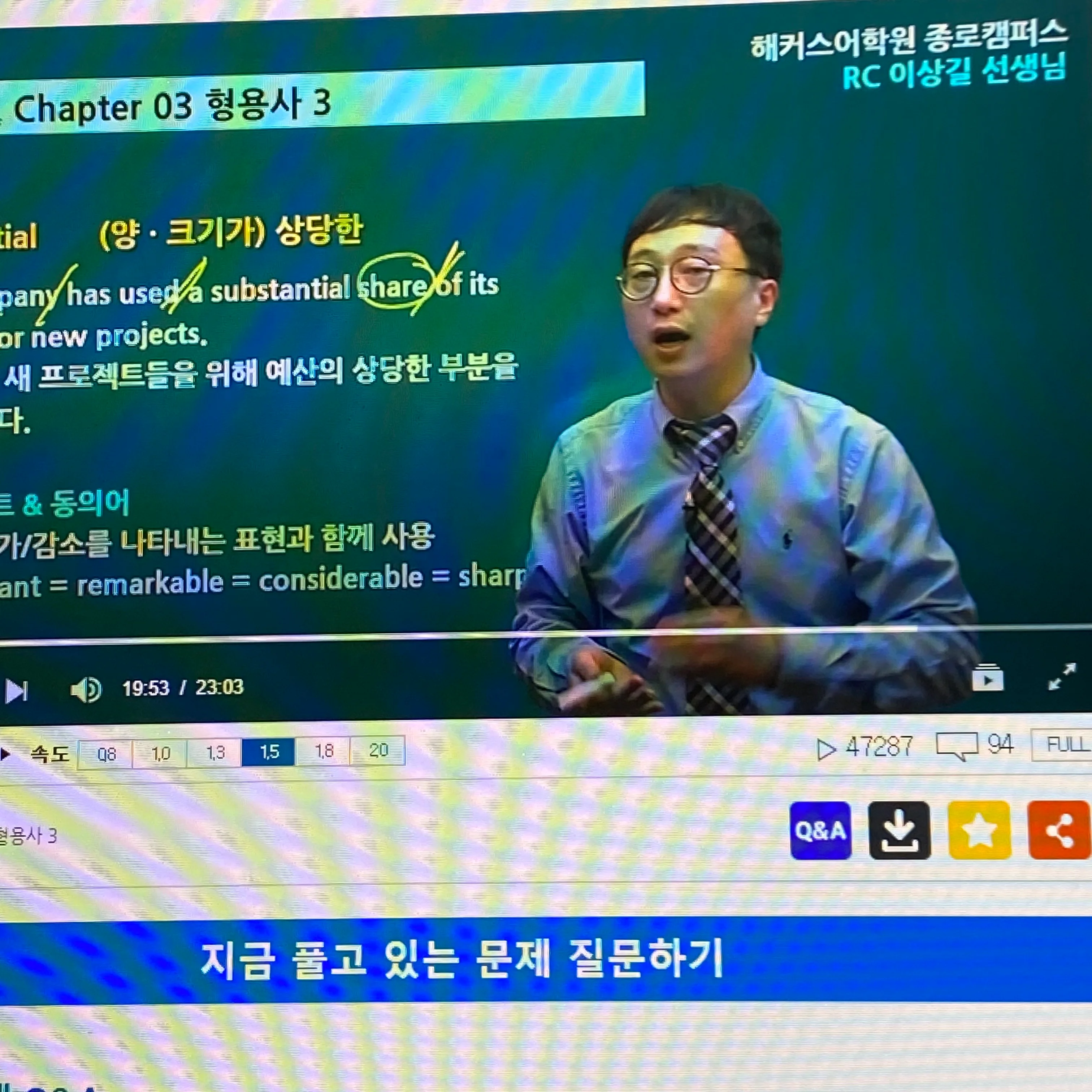
substantial (양, 크기가) 상당한
The company has used a substantial share of its budget for new projects.
그 회사는 새 프로젝트들을 위해 예산의 상당한 부분을 사용해 왔다.
출제 포인트&동의어
주로 증가/감소를 나타내는 표현과 함께 사용
= significant = remarkable = considerable = sharp
confidential 기밀의
collocation & 동의어
confidential nature/information 비밀의 속성/비밀 정보
secret = classified
unanimous 만장일치의
Ms.Kyle was elected as the company's new CEO following a unanimous vote by the board.
Ms.Kyle은 이사회에 의한 만장일치 표결에 따라 회사의 새로운 최고 경영자로 선출되었다.
숙어 표현
1. be unanimous for ~에 찬성하다
2. anonymous 익명의

 0
0


