



(강의 내용 정리)
18강에서는 세부적인 부사 강조부사를 공부하였습니다.
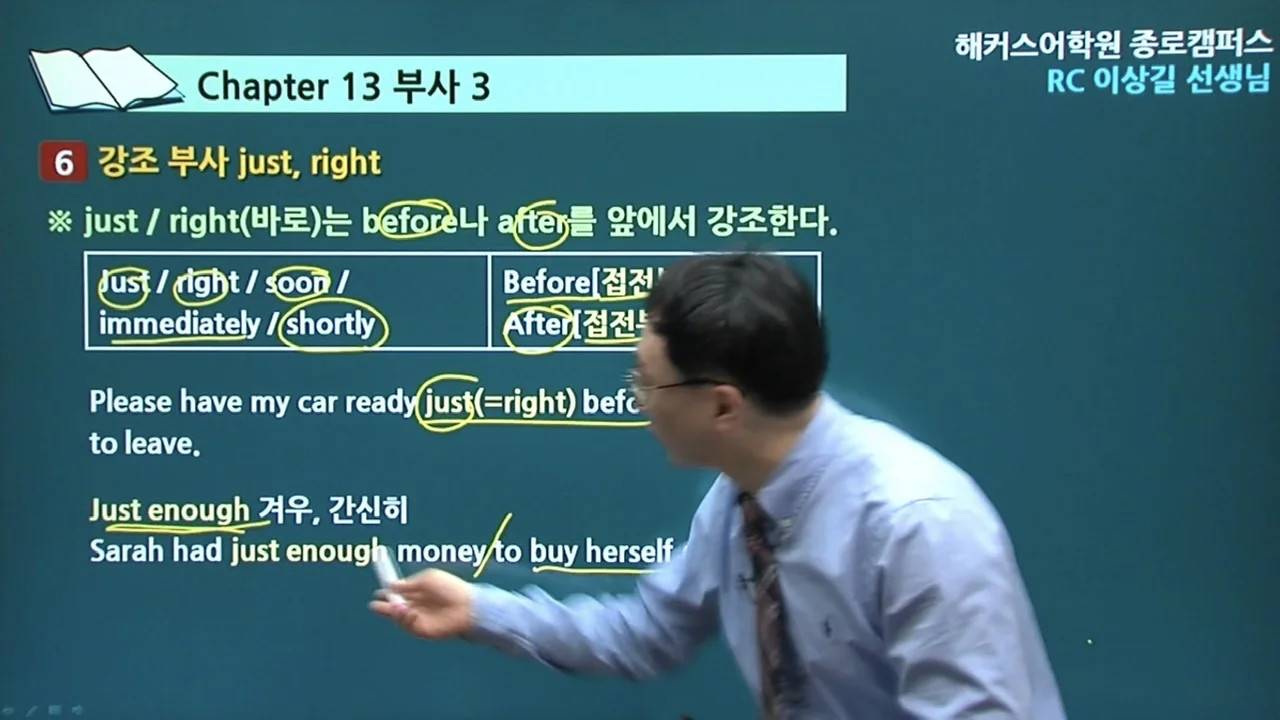
강조 부사 just, right
* just / right 는 before나 after를 앞에서 강조
just / right / soon / immediately / shortly
before[접전부] after[접전부]
ex) Please have my car ready just(=right) before I have to leave.
just enough : 겨우, 간신히
ex) Sarah had just enough money to buy herself dineer.
* only / just(오직, 단지)는 전치사구나 명사구를 강조함
ex) Employees may wear casual attire only on Fridays. -> 오직
ex) There will be just a brief delay while we test the equipment. -> 단지, 잠시만의
only / just + 숫자 -> 겨우
only 5 dollars -> 겨우 5달러
* well(훨씬)은 전치사구를 강조함
ex) The final cost of the renovations was well under the original estimate.
well in advance. -> 훨씬 이전에
well + 과거분사
well-dressed -> 잘 차려 입은
well-informed -> 정통한, 잘 알고 있는
well-educated -> 교육을 잘 받은
well-organized -> 잘 정돈된
well-attended -> 사람이 많이 온
* even(~조차도, ~까지도)은 단어나 구를 앞에서 강조
even 대표 용법
1)비교급 강조 = much / far / even / way
even –er/more/less
2) 강조 -> ~까지도, ~조차도, ~마저, 심지어는
ex) Even my mother felt that the drama was too sentimenatal. -> 심지어
even the smallest detail : 심지한 아주 세세한 부분까지도
quite(굉장한)는 a / an + 명사를 앞에서 강조함
The singer’s nightly concert was quite an accomplishment.
1) quite + a/an + 명사
quite a view -> 정말 멋진 전망이군
2) not ~ quite -> 꼭 ~인 것은 아니다
I am not quite able to accept the situation.
3) quite + 형/부 = a little / quite / pretty / fairly / very surprising
원급 – so, very, just
비교급 – much, even, far, a lot, way, -er, more, -less
최상급 – by far, single 최상급 ever(지금까지)
1) by far, single
2) ever
3) very + best / last / first
very best wine
very first person
very last chance
원급 / 비교급 / 최상급 예시
This resort is just as luxurious as the one further up the beach. -> 원급
Aron’s proposal was much better than Steve’s. -> 비교급
Seron is by far the largest steel producer in the country. -> 최상급
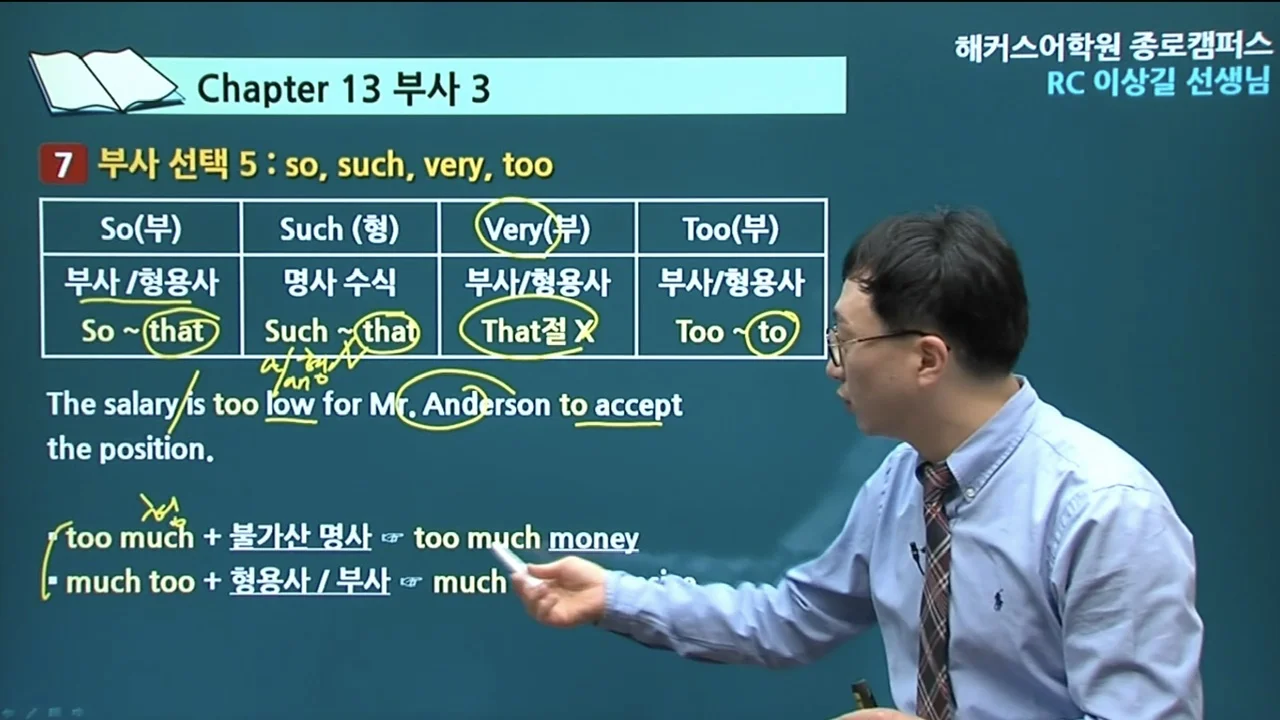
부사 선택 : so ,such, very, too
so(부사) : 부사 / 형용사 수식 So ~ that
such(형용사) : 명사 수식 Such ~ that
very(부사) : 부사/형용사 수식 That절 -> x
too(부사) : 부사/형용사 수식 Too ~ to
The salary is too low for Mr, Anderson to accept the position.
too much(형) + 불가산 명사 -> too much money
much too(부) + 형용사 / 부사 -> much too expensive
also : 긍정 (맨 처음, 중간)
too : 긍정 (맨 끝)
as well : 긍정 (맨 끝)
either : 부정
ex)
The firm has offices in New York, Vancouver, and also London.
The accounting manager will attend the conference too / as well
Steven won’t be working on Saturday ; Sarah won’t be woring either.
later(이후에) / thereafter(그 이후에) / since(그 이래로)
City council approved the construction project six weeks later. [그 시간 이후에]
Why don’t we talk this over later?
later가 시간 관련표현과 사용되지 않으면 -> 지금 이후에
Sally left and her package was deilverd shortly(later, thereafter)
Later 지금 이후에 vs Thereafter 그때 이후에
later(이후에) / thereafter(그 이후에) / since(그 이래로)
Fiona finished university and has since been employed by a publishing company.
since(접접전부) 완료 시제와 함께 사용
forward -> 앞을 향해서(장소) / ahead -> 앞에(상태)
backward -> 뒤를 향해서 / behind -> 뒤에
ex) In the months(forward, ahead), employees will have to work extra hours 여러 달 남아 있는 상태
I looked at the car ahead.
(18강 어휘)
1. signs of wear : 낡은 흔적 (출제 포인트 : wear 명사로 마모, 닳음 a sign of tear : 파손의 흔적)
2. contribution to : ~에 기부, 공헌 (관련 어휘 : make a contribution to ~에 기부하다 contribution : 기고)
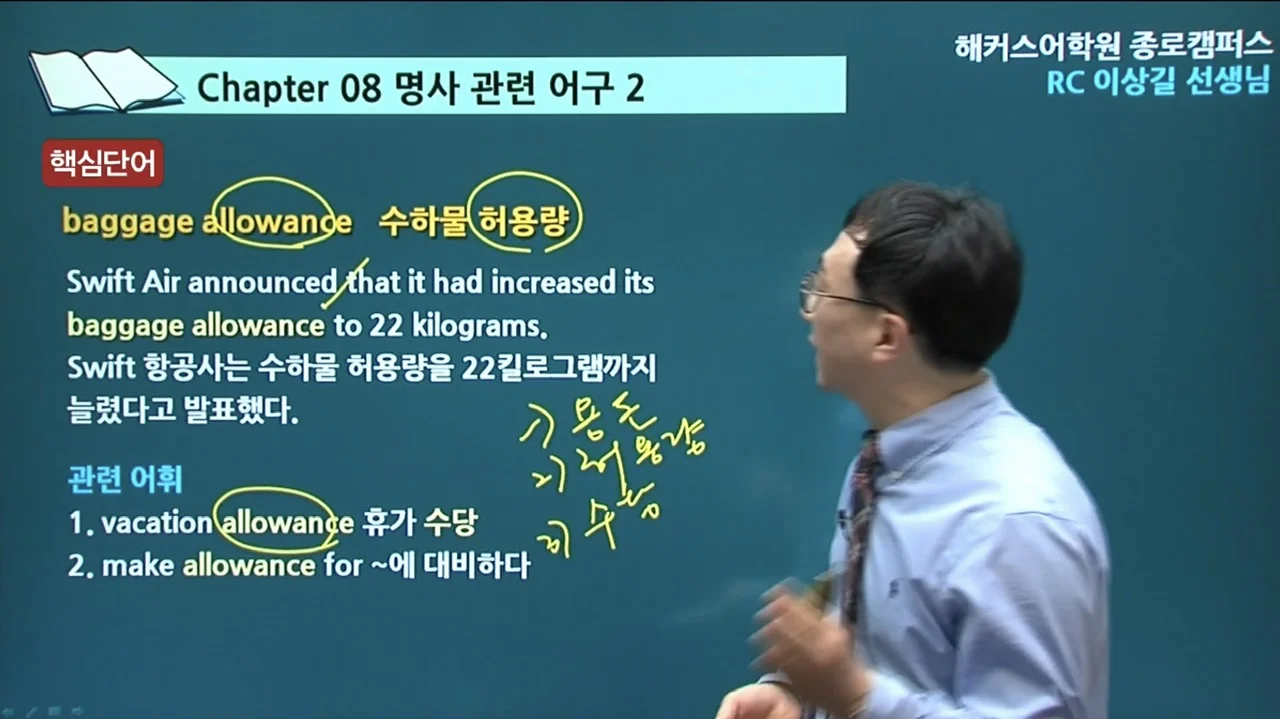
3. baggage allowance : 수하물 허용량 (allowance 1. 용돈 2. 허용량 3. 수당
vacation allowance 휴가 수당, make allowance for : ~에 대비하다)
4. performance appraisals : 업무 수행 평가 (performance 수행, 실적, 성능, 공연,
appraisal = evaluation = assessment)
5. compliance with + 규칙(규칙에) 대한 준수(관련 어휘 observe = obey = comply with = adhere to, be compliant with : ~을 준수하는)
6. confidence in : ~에 대한 신임(관련 어휘 confidence 자신감, 신뢰, confident 자신감 있는, confidential 비밀의 = classified)
(18강 수강 후기)
17강에서 배웠던 부사에 이어서 세부적인 강조 부사에 대해서 공부하였는데요, 원급, 비교급, 최상급 강조 부사와 함께 어울리는 콜로케이션 같은 just enough(간신히), right after/before을 바로바로 시험에 나오면 정답을 찍을 수 있게 외울 수 있었고요 quite가 여러자리에 와서 꾸며줄 수 있다는 것을 예시문장으로 공부하여 익혔고, such, so, very, too와 같은 부사들의 위치도 꼼꼼히 공부하였습니다. 어휘부분에서는 contribution과 같이 오는 전치사 to라는 것, allowance와 performance 같이 다양한 의미를 가지는 명사들도 공부하였습니다. 부사가 단순히 -ly만 붙힌 형태만이 아닌 이렇게 다양한 부사들이 문장에서 중요한 의미 보충을 해준다는 것도 깨달았습니다!

 0
0


